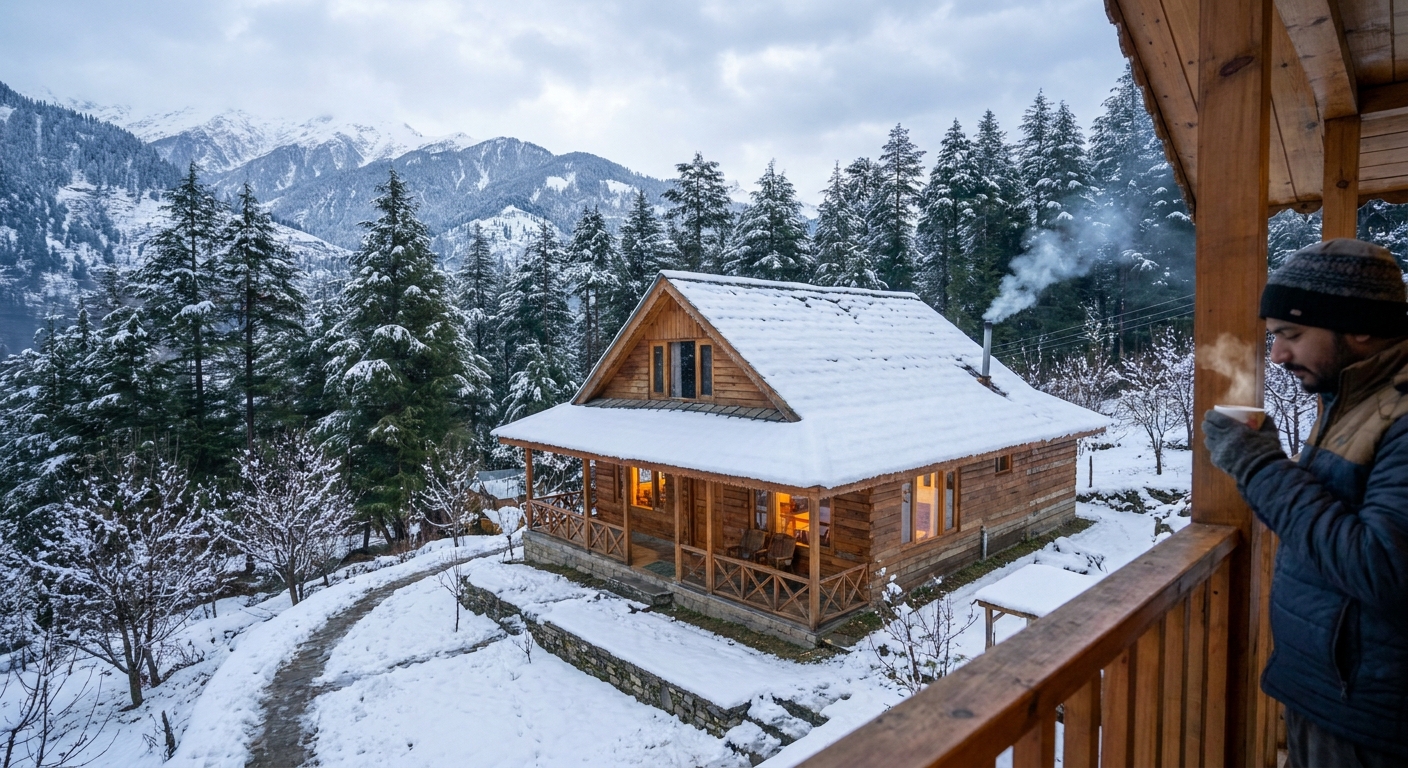
Snowfall turns Manali into a different town between December and February, and the homestay you book decides whether you watch it from a heated window seat or shiver through a power cut at 2 AM.
- Homestays in Manali near Old Manali and Naggar hold heat and road access better than Solang Valley cabins in peak snow: Buy.
- Central heating or a bukhari stove is non-negotiable below freezing; wifi-only listings without heating specs are a Skip.
- Solang Valley stays are the adventure pick for 2026 but get cut off for 12-24 hours after heavy snow.
- Verified, instant-confirmation homestays in Manali on Homeyhuts carry zero commission, so the quoted price is the price you pay.
- Book road-accessible Manali town properties as backup if your dates fall in a peak snowfall week.
Why this matters
Manali's winter season pulls the highest search volume of the year for homestays in Manali, and 2026 is no exception with the town booked solid through most of January. The problem isn't availability, it's mismatch: guests book a "mountain view cottage" in October pricing photos and arrive to find no heating, no hot water backup, and a road that closes above Old Manali for two days after a fresh dump.
A snowfall trip has different failure points than a monsoon or summer trip. Heating, insulation, and road access matter more than the view from the balcony. Get those three wrong and the "snowfall getaway" becomes a 48-hour ordeal in a cold room with no way down.
Who this is for
This guide is for travelers booking a winter 2026 trip to Manali specifically for snow — couples chasing a first-snowfall experience, families with kids who've never touched snow, and photographers who want Himachal light without the Shimla crowds. It is not for summer trekkers or April-to-June visitors; different criteria apply once the snow melts.
What to look for in homestays in Manali for a snowfall getaway
Altitude and snow reliability
Manali town sits around 2,050 meters; Old Manali and Solang Valley sit higher and get snow earlier and heavier in the season. Higher altitude means a more reliable snowfall experience but also colder nights and a longer walk from parked cars once roads get slick.
Heating type, not just "heating available"
A listing that says "heater" often means one portable room heater for a three-room stay. Ask specifically whether the property runs central heating, in-room bukhari (wood stove) heating, or electric heaters only — the difference decides whether you sleep warm or layer up in a sleeping bag indoors.
Road access after snowfall
Roads above Old Manali toward Vashisht and Solang Valley regularly shut for 12 to 24 hours after heavy snow until clearing crews pass through. A homestay on the main Manali-Kullu road stays reachable even on a bad snow day; a cabin three kilometers up a side track might not.
Hot water and power backup
Winter in Himachal brings frequent power cuts, and cold water at 4°C is not a minor inconvenience. Confirm the property runs a geyser on backup power or gas, not just a solar heater that fails on cloudy, snow-heavy days.
Verified host and instant confirmation
Peak season listings get overbooked on unverified platforms more than any other time of year. A verified stay with instant confirmation removes the risk of arriving to a cancelled booking with no backup in a town running at full occupancy.
Kitchen or hot food access
After a day in the snow, a kitchenette or an in-house cook matters more than it does in summer. Restaurants close early in winter and getting food delivered up snowbound lanes is unreliable past 8 PM.
Top picks by area
Old Manali riverside stay — the walkable pick. These homestays sit within a 10-15 minute walk of Manali's main market, so a road closure higher up doesn't strand you. Look for central heating over portable heaters; riverside rooms run colder at night. Verdict: Buy for first-time winter visitors who want snow without isolation.
Naggar hillside homestay — the quiet pick. Roughly 20 km from Manali town, Naggar sees fewer tourists and slower, steadier snowfall through January. The tradeoff is a longer drive to restaurants and markets once roads get slick. Verdict: Buy if you're prioritizing quiet over convenience and your driver is comfortable on snow.
Solang Valley cabin — the adventure pick. Closest to skiing and snow activities, Solang Valley cabins get the heaviest, most reliable snowfall of any Manali-area homestay. Expect 12-24 hour road cutoffs after major snow and confirm the property has its own generator. Verdict: Consider for skiers who accept the access tradeoff; Skip if you're traveling with elderly guests or young kids.
Manali town centrally located homestay — the safe pick. Central Manali stays keep you on the main road, closest to hospitals, grocery stores, and taxi stands if plans change mid-trip. Snow accumulation here is lighter than Old Manali or Solang but reliability of access is the highest in the region. Verdict: Buy as a backup or primary base for anyone new to winter mountain travel.
Browse verified Manali homestays
Zero commission, instant confirmation, direct from local hosts.
What to avoid
- Rooftop cafe-style rooms with glass walls — they photograph well but lose heat fast once temperatures drop below 5°C at night.
- Listings that mention "mountain view" but not heating type — this is the single biggest gap between photos and reality in winter bookings.
- Unpaved-access cabins with no generator backup — a scenic driveway becomes a liability the moment snow settles for two days straight.
Verdict comparison
| Area | Snow reliability | Road access | Heating check needed | Verdict |
|---|---|---|---|---|
| Old Manali | High | Good, walkable | Central preferred | Buy |
| Naggar | High | Moderate, longer drive | Bukhari or central | Buy |
| Solang Valley | Highest | Poor after heavy snow | Generator required | Consider |
| Manali town | Moderate | Best, main road | Standard heater ok | Buy |
FAQ
What's the best area for homestays in Manali during snowfall?
Old Manali and Manali town offer the best balance of snowfall and road access in 2026's winter season. Solang Valley sees heavier snow but risks 12-24 hour closures after storms.
Is Solang Valley better than Old Manali for a snowfall trip?
Solang Valley gets more reliable, heavier snow, but Old Manali stays reachable when roads close after a storm. Pick Solang for skiing access, pick Old Manali for reliability.
How much snowfall does Manali get in December and January?
Manali town sees light-to-moderate snow through December and January, while Solang Valley and higher points see the heaviest accumulation. Snowfall intensity depends heavily on the specific week and altitude.
Do Manali homestays have central heating in winter?
Not all of them. Some run central heating, others rely on bukhari wood stoves or portable electric heaters, so confirm the exact heating type before booking a 2026 winter stay.
Can roads in Manali close after heavy snowfall?
Yes, roads above Old Manali toward Solang Valley and Vashisht commonly close for 12 to 24 hours after heavy snow until clearing crews pass through. Homestays on the main Manali-Kullu road stay accessible.
Are homestays cheaper than hotels in Manali during winter?
Homestays typically undercut hotel rates for equivalent space and often include a kitchen, which matters when restaurants close early during winter. Zero-commission platforms show the direct host rate without markup.
What should I pack for a Manali homestay in snowfall season?
Pack thermal layers, waterproof boots, and a portable power bank given frequent winter power cuts. Confirm with your host whether extra blankets or heaters are provided before you travel.
Is it safe to book a homestay in Manali during peak snow season?
It's safe when the listing is verified with instant confirmation, since peak season overbooking is the most common failure point in winter. Unverified platforms carry higher cancellation risk in December and January.
One last thing
The listings that look the coldest in photos — bare wood interiors, small windows, thick stone walls — are usually the warmest in person, because that construction style is built for exactly this climate. Glass-heavy, Instagram-friendly rooms lose heat the fastest once the temperature drops after sunset in January 2026.